
Overbuilding fossil fuel generation threatens Puerto Rico's affordability and climate goals
Download Full Report
View Press Release


Key Findings
Puerto Rico is in danger of overbuilding its centralized electricity generation system.
Proposals to overbuild the system with plants relying on imported natural gas would place even greater burdens on ratepayers.
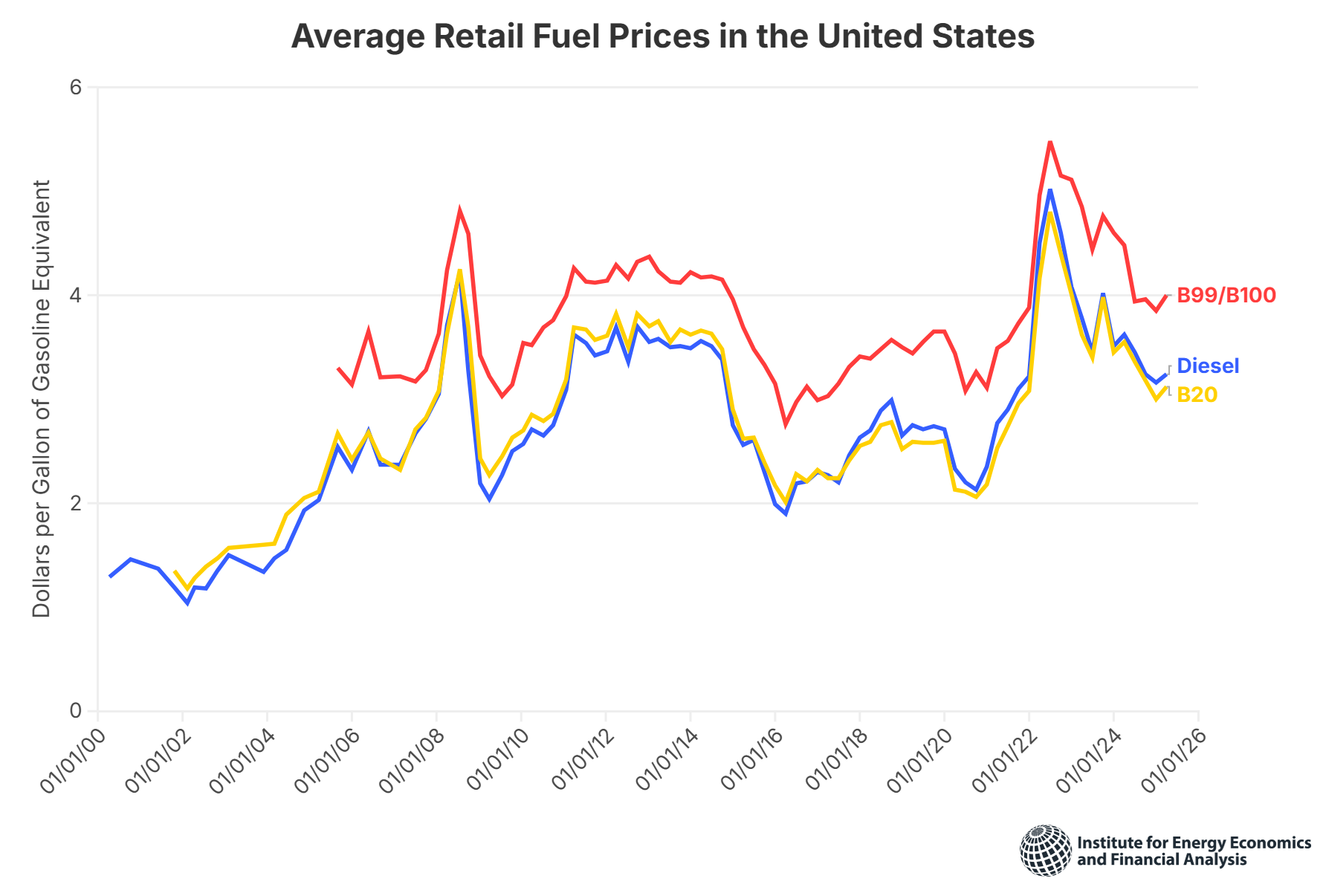
The island is unlikely to meet its 100% renewable energy target by 2050 if it relies on biodiesel and green hydrogen as future fuels.
Puerto Rico should expand its efforts to build out more affordable and realistic renewable energy sources rather than rely on volatile, unreliable, and expensive fossil fuels.
Executive Summary
Puerto Rico consistently has among the highest electric rates in the United States, exacerbated by the island’s low median household incomes. Decisions are likely to be made this year that will affect Puerto Rico’s electric rates for decades.
In addition to the base rate case and the integrated resource planning (IRP) case currently before the Puerto Rico Energy Bureau (PREB), the future cost of electricity will also be heavily influenced by ongoing procurement decisions, including a process for 3,000 megawatts (MW) of new power generation.
Conducting major generation procurement decisions outside the IRP process means there is neither an analysis of the impact of these resources on the rest of the system (and therefore on total system costs or rates) nor an analysis of alternative pathways, such as greater reliance on distributed generation.
The omission of alternative pathways is particularly striking given the high level of public interest in distributed renewable energy, as shown by the accelerating investment in rooftop solar and storage, largely driven by the grid’s unreliability. Distributed generation, which does not depend on long-distance transmission to provide power to loads, offers a much higher degree of resilience for homes and businesses. Renewables are also not subject to the same volatility caused by geopolitical events as fossil fuels.
This report warns of the potential overbuild of Puerto Rico’s centralized generation system and of its continued dependence on imported natural gas. The financial risks to ratepayers of overreliance on natural gas are heightened by the conflicts of interest posed by New Fortress Energy, the natural gas supplier to the north coast of the island, and the operator of the Puerto Rico Electric Power Authority (PREPA) thermal power plants.
Continued ad hoc contracting for new generation capacity, outside of the integrated resource planning process and with no publicly available modeling of electric rate impacts, undermines the effectiveness of sound energy planning in Puerto Rico and puts ratepayers at risk of even higher rates.

Related Content


